
Skin & Aging · July 5, 2026 · 6 min · By Jasmine Holloway
Skin tightening for early jowls: ultrasound and radiofrequency, honestly
What energy-based tightening can genuinely do for a softening jawline, and where it stops.
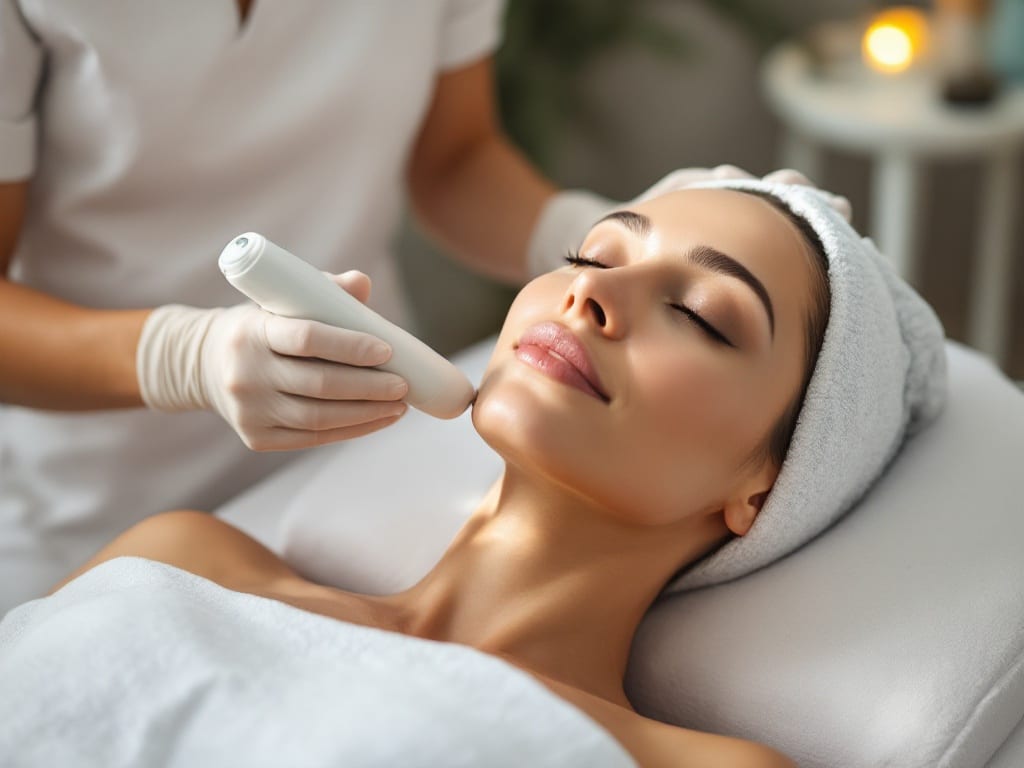
Somewhere in the late thirties or forties, many people notice the jawline losing its crispness not because anything was added but because the skin holding it taut began to let go. Early jowls, the soft interruption of the jaw border beside the chin, are usually a skin quality story rather than a fat or bone story, and they are the problem energy-based skin tightening was built for. The technology is real, the marketing around it is inflated, and the useful skill is telling the two apart.
The two established families are microfocused ultrasound (best known as Ultherapy) and radiofrequency. Ultrasound focuses heat at precise depths, reaching the deeper support layer of the face, and triggers a slow remodeling response: new collagen forms over two to six months and the tissue gradually firms and lifts. Radiofrequency heats more broadly and superficially, comes in surface and needle-assisted (microneedling RF) forms, and typically asks for a short series of sessions rather than one. Clinical work on microfocused ultrasound of the lower face and upper neck supports measurable lifting and tightening in that zone, which is exactly where early jowls live.
What a realistic result looks like
The honest expectation is a firmer, better-held jawline, not a lifted one. Energy devices reliably deliver modest tightening, the kind you notice in the mirror and photographs notice less, developing gradually over months. They work best on mild to moderate laxity in people whose skin still has decent spring, which is why they suit the early-jowl years so well. What they cannot do is reposition tissue that has genuinely descended: established jowls and loose neck skin are surgical territory, and the gap between a device result and a lower facelift or neck lift is not close. A provider who frames ultrasound as "a facelift without surgery" is selling, not assessing.
Tightening also interacts sensibly with the rest of the jawline toolkit. Firmer skin showcases the structure beneath it, so tightening pairs naturally with filler placed for definition once laxity is controlled, and sequencing matters: treating laxity first often reduces how much filler the border needs. Conversely, adding volume to a jawline blurred mainly by loose skin tends to disappoint, one of the classic mismatches between tool and cause we flag throughout this site, including in why a defined jawline matters.
Practical notes are brief. Sessions run thirty to ninety minutes, ultrasound can be uncomfortable in a deep, achy way while RF is gentler, downtime is minimal for both, and results build slowly enough that judging anything before three months is premature. Effects last one to two years and maintenance is expected, similar in rhythm to the upkeep economics in how long jawline enhancement lasts.
The takeaway: for the early, soft phase of jowling, energy-based tightening is a legitimate, evidence-supported way to hold the line, provided you buy it as maintenance and firmness rather than transformation. Ask the provider to show you their results at your age and laxity level, and if what you actually have is significant sagging, respect the honest answer that a device is the wrong purchase.
Related reading: Skin quality and a defined jawline.